EMT

Paramedic
Program

Get started today.

1 of 7

    [acceptance* consent id:cf7-consent]

    Accelerated Training. Focused Preparation.
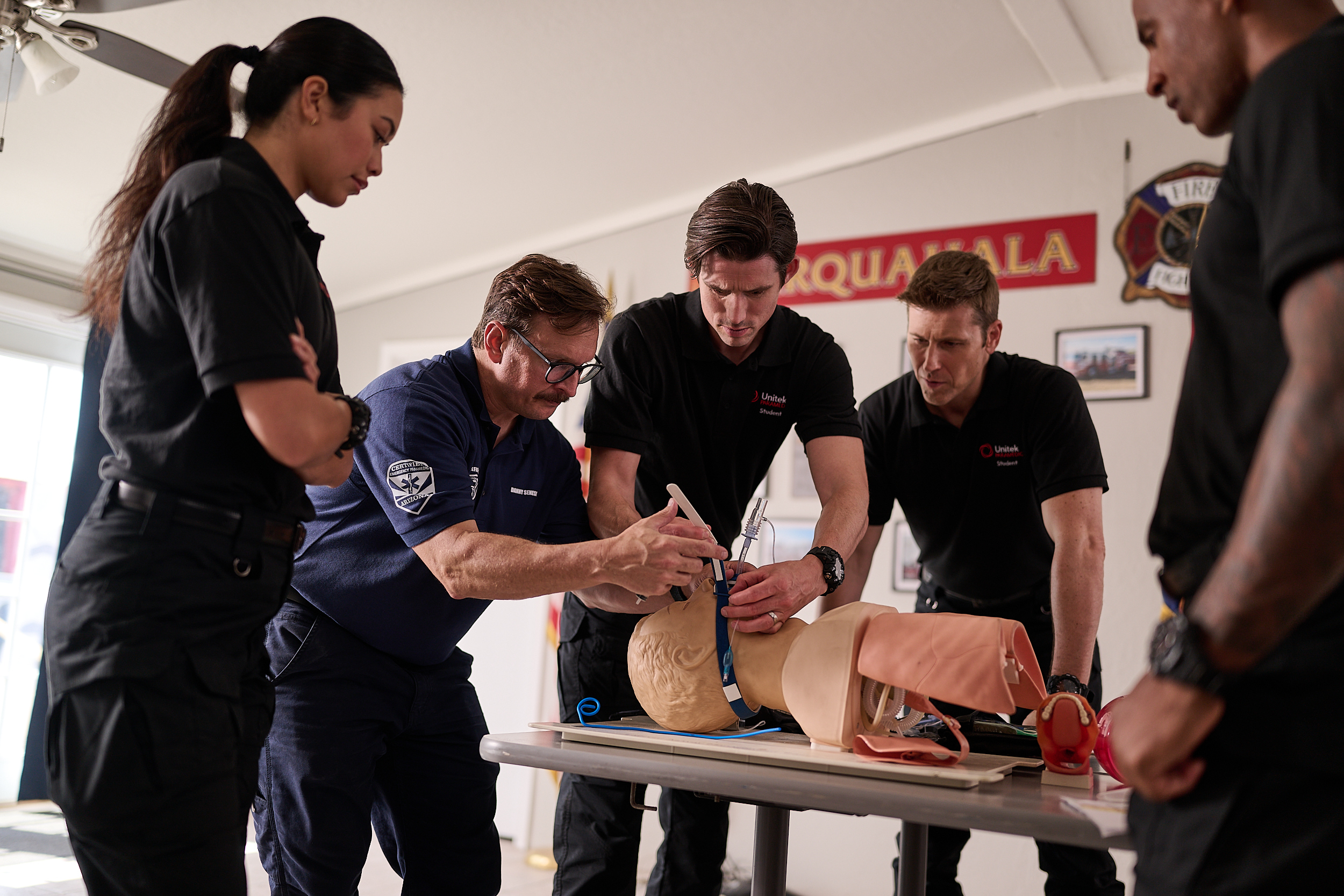
    Becoming a paramedic requires advanced training, clinical expertise, and the ability to make critical decisions in high-pressure situations. The Unitek Paramedic Program is designed to help experienced EMS professionals take the next step in their careers through rigorous instruction, hands-on skills development, and real-world patient care experiences.

    This accelerated program can be completed in as little as six months and features a structured Monday through Thursday schedule with 10 hours of daily instruction, allowing students to fully immerse themselves in advanced pre-hospital emergency care training.

    Through a combination of classroom learning, skills labs, clinical rotations, and field experience, students can develop the knowledge and confidence needed to provide critical patient care in a variety of emergency settings.

    Seats are limited, and start dates fill quickly, so reserve your spot today.
    Hands-On Training
    Learn advanced skills through immersive labs and real-world EMS simulations.
    EXPERIENCED INSTRUCTORS
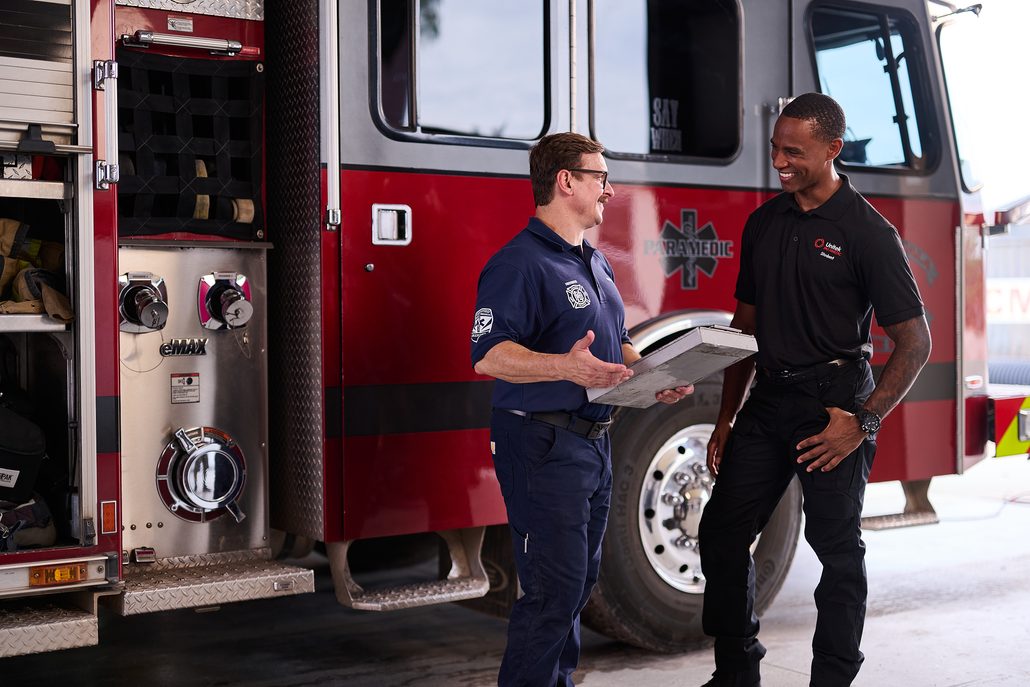
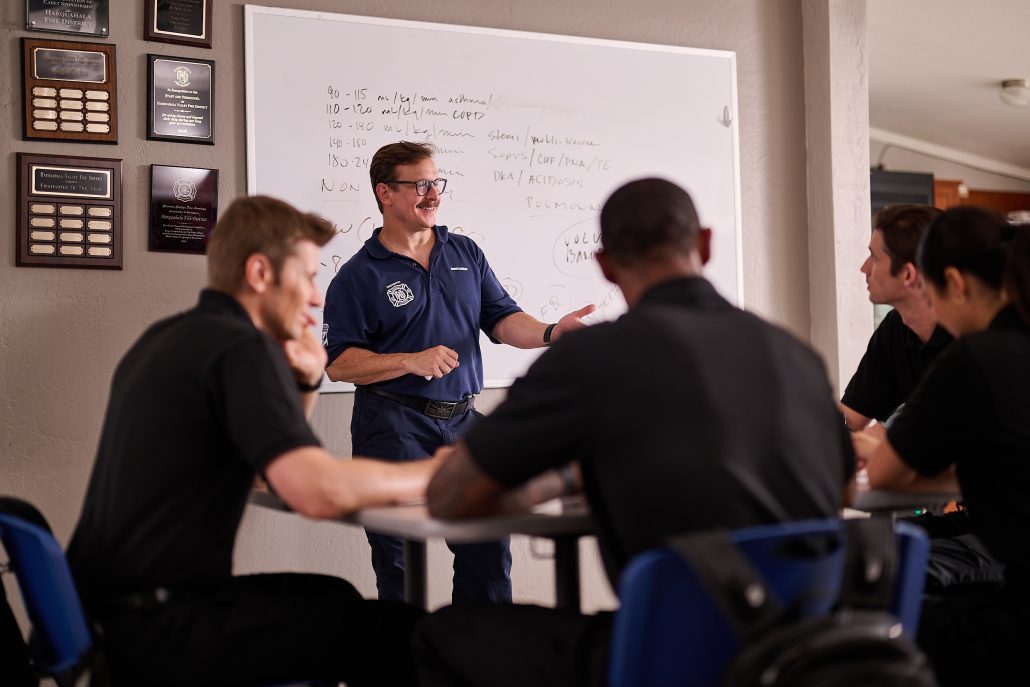
    Train with seasoned EMS professionals who bring real field experience into the classroom.
    NREMT CERTIFICATION
    Prepare for national certification and expand your opportunities in EMS.
    View all

    Paramedic program curriculum

    Comprehensive training that combines didactic instruction, clinical rotations, and supervised field experience.

    Clinical Assignment Policy

    1. Overview & Purpose

    To ensure high-quality patient care and student safety, all paramedic students must complete a minimum number of clinical hours (typically 500+ hours in Arizona) across diverse hospital departments. Students will practice advanced psychomotor skills under direct supervision by approved preceptors.

    1. myClinicalExchange (mCE) Requirements

    All students must maintain an active account on myClinicalExchange to manage their clinical journey.

    • Onboarding & Compliance: Students must complete all hospital-specific requirements through mCE before any rotation begins.
    • Scheduling: All rotations must be scheduled via mCE. Students are strictly prohibited from “cold-calling” hospitals or preceptors directly to request shifts.
    • Documentation: Students must use the mCE platform to track their rotation progress, manage compliance documents, and link external screening reports if required.
    1. Eligibility & Prerequisites

    Before entering the clinical phase, students must meet these Arizona-specific standards:

    • Academic: Maintain a minimum cumulative grade (often 80%) in all didactic and lab portions of the program.
    • Certifications: Possess a current Arizona EMT certification and a valid American Heart Association (AHA) BLS Provider card.
    • Medical Clearances: Provide proof of immunizations (MMR, Varicella, Tdap, Hep B, TB test, and annual flu shot) and pass a 10-panel drug screen and federal background check.
    1. Clinical Site Conduct
    • Attendance: Clinical assignments are fixed. Students must attend 100% of scheduled shifts and notify the Program Coordinator and site preceptor immediately of any emergency absences.
    • Professional Appearance: Students must wear the approved program uniform (clean, wrinkle-free) and a visible school ID. Male students must be clean-shaven; tattoos may need to be covered in specific departments like Labor & Delivery.
    • Patient Selection: Students cannot be selective about patient assignments and must accept all patients assigned by their preceptor to meet competency requirements.
    1. Evaluation & Documentation
    • Daily Evaluations: Before leaving a clinical site, students must ensure their preceptor completes a daily evaluation (often through Platinum Planner or mCE) and sign off on the shift hours.
    • Integrity: Falsification of any clinical documentation or hours will result in immediate dismissal from the program.

    Are you struggling, worried, or doubtful about pursuing an EMT career? The Unitek EMT staff will provide the support you need to succeed. Unitek EMT is definitely worth it if becoming an EMS professional is your goal.

    Zachary Jacovo. Unitek EMT Graduate

    If you are ready to put in the work, Unitek EMT will get you to the finish line. Amazing training!

    Nina Westcott. Unitek EMT Graduate

    I'm so happy I chose Unitek EMT. The school is super organized, and the instructors are all seasoned EMS professionals; I dream of becoming a Helicopter Trauma Paramedic. Two instructors are Flight Paramedics, and they guided me a lot. The lectures are informative and very interesting. It's a lot, no doubt. It's difficult, no doubt. But trust the process, and you'll succeed!

    Robb Owsley. Unitek EMT Graduate

    Paramedic Program Cost

    Below is a breakdown of tuition and fees for each Unitek Paramedic course offering:

    Fee Type Amount
    Registration Fee* $200.00
    Courseware** $350.00
    Uniform $150.00
    Tuition $12,800.00
    Total Charges $13,500.00


    Important Notes

    *The Registration Fee is refundable only within three (3) business days of signing the Enrollment Agreement, excluding weekends and federal/state holidays. See the Refund Policy section for full details.

    **Courseware and Uniform fees are non-refundable once used.

    Unitek Paramedic does not provide on-campus housing and therefore does not charge any fees related to room, board, or living expenses.

    Paramedic Program Admissions Requirements

    Requirements to Enroll and reserve your seat

    • Be 18 years of age or older
    • Possess a high school diploma or equivalent (see acceptable documentation below*)
    • Current, unrestricted Nationally Registered EMT and/or Arizona state EMT
    • Current AHA BLS Provider card
    • Current Arizona Department of Public Safety Fingerprint Clearance Card
    • Successful background check: “The National Registry may deny an applicant eligibility to sit for a certification examination, deny certification, suspend or revoke an individual’s certification, or take other appropriate action with respect to the applicant’s certification or recertification based on an applicant’s felony criminal convictions and all other criminal convictions (whether felony or misdemeanor) relating to crimes involving physical assault, use of a dangerous weapon, sexual abuse or assault, abuse of children, the elderly or infirm and crimes against property, including robbery, burglary and felony theft” (NREMT, 2026). Please review NREMT Policy 51.05 ‘Criminal Convictions’ and contact an advisor or the Program Director with questions. Unitek EMT & Paramedic supports the training and job placement of individuals with criminal history; however, students must be able to qualify for certification.
    • Successful 10-panel drug test
    • Successful Interview with Program Director or his/her designee
    • Required Immunizations/tests (requirements for both Unitek Paramedic and Clinical partners). Immunizations and tests include:
      • Varicella, Measles, Mumps, Rubella, Hepatitis B series, or signature by student on a waiver declining the series.
      • Influenza (‘Exempted Status’ can be requested, please talk to your advisor prior to application for information.)
      • COVID-19 and current series of boosters (‘Exempted Status’ can be requested, please talk to your advisor prior to application for information.)
      • Negative Tuberculosis skin test.
      • Proof of a recent negative result of an IGRA test (QuantiFERON, T-Spot) OR current Mantoux Method PPD 2-step process.

    *Proof of High School Completion

    Applicants must provide proof of high school completion or higher education prior to enrollment. Acceptable forms of documentation include:

    • A copy of a U.S. high school diploma or official transcript from a:
      • State-approved school
      • U.S. Department of Education-recognized institution
    • A General Educational Development (G.E.D.) certificate
    • A certificate of homeschooling completion from a recognized state-approved or U.S. Department of Education-approved program
    • An Associate’s, Bachelor’s, or Master’s degree or transcript from a U.S. Department of Education-accredited college or university
    • For foreign education, an evaluation of equivalency by a recognized credential evaluation agency

    (Approved agencies list: ctc.ca.gov/credentials/leaflets/cl635.pdf)

    1. Current, unrestricted Nationally Registered EMT and/or Arizona state EMT, and Current AHA BLS Provider card.
    2. Required Technical Standards and Functional Job Description:
      • To successfully complete the Paramedic program, students must demonstrate competencies in the following areas. These attributes are essential for safe, competent, and compassionate practice in emergency medical services.

    Psychomotor Skills

    • Coordination: Perform precise movements and handle medical equipment accurately.
    • Manual Dexterity: Use hands effectively for procedures such as CPR, injections, and tool manipulation.
    • Reaction Time: Respond quickly and appropriately in emergency situations.
    • Physical Endurance: The ability to continue to last, despite fatigue, stress, or other adverse conditions.
    • Stamina: Maintain physical activity over extended periods, often in stressful environments.
    • Resilience: Recover effectively from physical exertion and stress.
    • Adaptability: Adjust to varying physical demands throughout the workday.

    Strength and Mobility

    • Physical Strength: Lift, carry, and move patients and equipment safely.
    • Flexibility: Bend, stretch, and move easily in diverse emergency settings.
    • Balance: Maintain stability while handling patients or working in dynamic environments.

    Observation and Sensory-Motor Skills

    • Attention to Detail: Detect subtle changes in patient condition or environmental hazards.
    • Visual Acuity: Accurately assess skin color, vital signs, and potential threats—often in low-light or high-stress conditions.
    • Hearing Sensitivity: Identify important sounds such as abnormal breathing or communication through radios and phones amidst background noise.

    Intrapersonal and Communication Skills

    • Self-Awareness: Recognize personal limits and emotional states.
    • Self-Regulation: Control emotional reactions during high-pressure scenarios.
    • Empathy: Relate to and support patients with compassion and understanding.

    Emotional Stability

    • Stress Management: Remain composed and make sound decisions under stress.
    • Emotional Resilience: Cope with exposure to traumatic or emotionally difficult events.
    • Patience: Interact calmly with patients who may be uncooperative or distressed.

    Analytical and Critical Thinking

    • Problem-Solving: Evaluate situations and implement effective solutions quickly.
    • Decision-Making: Make informed judgments based on clinical evidence and observations.
    • Situational Awareness: Assess surroundings and conditions to act appropriately and ensure safety.

    Accreditation Status Statement:

    1. “Student Achievement Outcomes-Unitek Paramedic Program looks forward to sharing the future achievement outcomes of our graduates when that information becomes available.”
    2. “National Registry of Emergency Medical Technicians (NREMT) and Arizona state written Exam Pass Rates-Unitek Paramedic Program looks forward to sharing the NREMT and Arizona state written exam pass rates when that information becomes available.”
    3. “Retention Rates-Unitek Paramedic Program looks forward to sharing the retention rates of our graduates when that information becomes available.”
    4. “Positive Placement Rates-Unitek Paramedic Program looks forward to sharing the positive placement rates of our graduates when that information becomes available.”

    Student Grievance Procedure

    Students must submit grievances within 3 months of the incident(s) giving rise to the complaint. Complaints submitted after this period may be addressed at the discretion of the Program Director or his/her designee.

    To file a grievance:

    Attempt to resolve the issue informally with the instructor or relevant staff member. If unresolved, submit the grievance in writing to the Program Director (Danny Senese) or designee. The Program Director/designee will investigate and respond within five (5) business days. If the grievance remains unresolved, the student may file a complaint with the Arizona State Board for Private Postsecondary Education.

    Contact Information for the State Board:

    1740 W. Adams Street, Suite 3008
    Phoenix, AZ 85007
    Phone: 602-542-5709
    Website: http://ppse.az.gov

    English as a Second Language

    Unitek Paramedic does not offer English as a Second Language (ESL) instruction. All courses are conducted in English, and students must demonstrate proficiency in reading, writing, and understanding English prior to enrollment. International students are welcome to apply; however, visa services are not provided, and the institution does not sponsor or verify student visa status.

    Appeals Process

    Any student who feels an internal investigation into any incident or issue came to an unjust or untruthful conclusion may appeal that decision. The student must submit his/her appeal in writing within twenty-four (24) hours following the conclusion of the investigation. This may be sent as an email to the Program Director.

    Student Work Policy

    Unitek Paramedic does not place any direct restraint of student’s ability to work; however work cannot interfere with any aspect of the Paramedic Program. No work-related absences, tardiness, or overt fatigue will be excused.

    Published Outcomes

    Outcomes of Paramedic Cohorts will be published after each Cohort, in accordance with state and accreditation guidelines. Unitek Paramedic does not have any data to share as we are preparing for our first Cohort in August, 2026.

    Faculty Grievance

    Any faculty grievance is taken seriously and will be investigated by the Program Director. If it is found that any part(s) of the Code of Conduct has been violated in any way, the Sr. Director of Operations will be informed immediately. The findings of the investigation and management decisions will be made known to all affected parties. If the Program Director is an involved party of the grievance, an arbitrary Program Director or his/her designee will be responsible for the investigation. It is the hope of Unitek EMT & Paramedic that grievances can be resolved at the lowest level possible needed to find resolution. If any party feels the grievance was not handled appropriately, the faculty member(s) may file a complaint with the Arizona State Board for Private Postsecondary Education.

    Contact Information for the State Board:

    1740 W. Adams Street, Suite 3008
    Phoenix, AZ 85007
    Phone: 602-542-5709 Website: http://ppse.az.gov

    Faculty Recruitment

    Unitek Paramedic Program Director will continuously monitor programmatic needs. Regular assessment tools will be used to gauge current practices and assess for adjustments to staffing. Unitek Paramedic Program will hire new Instructors on an “as-needed” basis and consider retention and training of current employees.

    Safeguard Policies

    This document outlines the policies and procedures established to safeguard the health and safety of patients, students, faculty, and other participants in the Paramedic Program. These policies are designed to comply with Standard V.C. (Fair Practices – Student Health and Safety) of the Commission on Accreditation of Allied Health Education Programs (CAAHEP) and the Committee on Accreditation of Educational Programs for the Emergency Medical Services Professions (CoAEMSP).

    Patient Safety and Rights

    To ensure the highest standard of care and protection for patients during clinical and field rotations:

    1. Patient Safety and Rights

    To ensure the highest standard of care and protection for patients during clinical and field rotations:

    • Supervision: Students must be supervised by a qualified preceptor at all times when providing patient care.
    • Scope of Practice: Students may only perform skills and interventions for which they have received instruction and demonstrated competency in the laboratory setting.
    • Confidentiality (HIPAA): All patient information is strictly confidential. Students must follow HIPAA guidelines and are prohibited from retaining and sharing identifiable patient data in any forum, including social media.
    • Professional Conduct: Students must maintain a professional appearance and demeanor, following the program’s dress code and hygiene standards to ensure a safe and respectful environment for patients.

    2. Student Health and Safety

    The program is committed to protecting students from occupational hazards and ensuring their well-being:

    • Infection Control and Immunizations: Students must maintain current immunizations and undergo screening for communicable diseases as required by the program and clinical affiliates.
      • Please note that our clinical partners have the discretion to deny any request for an exemption or accommodation from the vaccination requirements at their own facilities to protect the safety of their patients.  A student that does not have all required vaccinations even if it is for valid religious or medical reasons may be unable to be placed in a clinical setting, complete the program, or obtain a job with specific employers upon completion of their program.
    • Personal Protective Equipment (PPE): Students are required to use appropriate PPE (e.g., gloves, masks, eyewear) during all patient contacts and lab activities. A respirator fit test (e.g., N95) is required prior to clinical placement.
    • Exposure Protocol: In the event of an accidental exposure to blood or body fluids, students must immediately follow the program’s written exposure plan, which includes reporting to the instructor/preceptor and seeking medical evaluation.
    • Physical Requirements: Students must meet the functional job descriptions for a paramedic, including the ability to lift, carry, and move patients safely.
    • Safety in the Field: Students are prohibited from operating emergency vehicles, flying on provider helicopters, or participating in fire-related activities during their rotations.

    3. Faculty and Participant Safety

    To maintain a safe learning environment for faculty, staff, and simulated patients:

    • Laboratory Safety: Proper student-to-instructor ratios (recommended at 6:1) will be maintained during lab sessions to ensure safe supervision of high-risk skills.
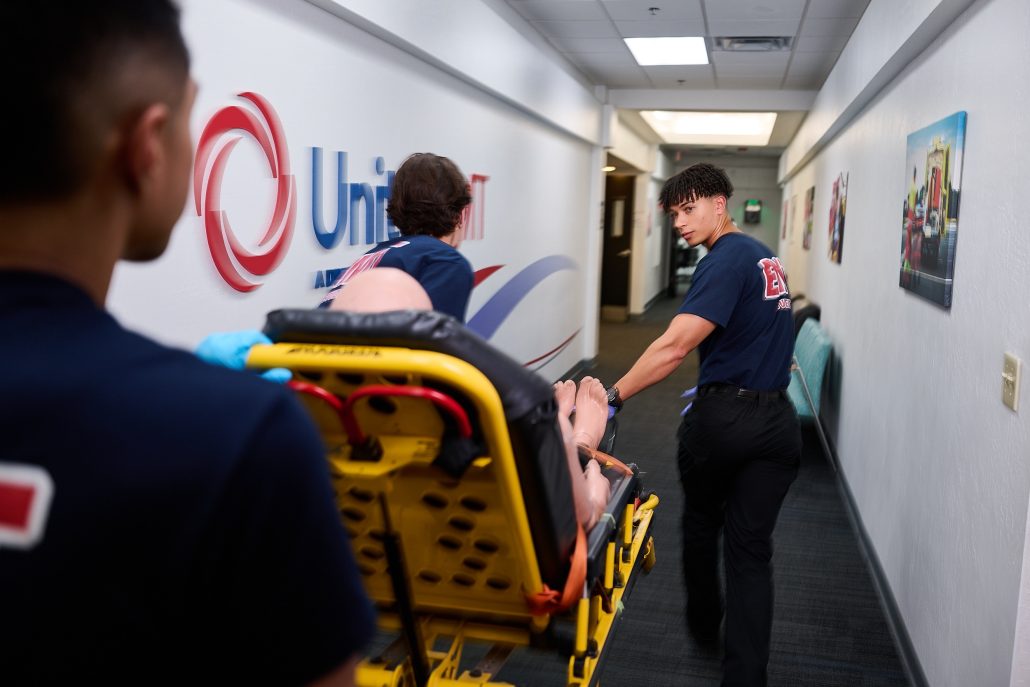
    • Equipment Maintenance: All training equipment, including stretchers and monitors, must be inspected regularly to ensure safe operation.
    • Zero Tolerance for Harassment: The program maintains a zero-tolerance policy regarding harassment, bullying, or discrimination of any participant.

    4. Professional Liability

    • Insurance Coverage: The sponsoring institution provides professional liability insurance for students and faculty while engaged in authorized program activities.
    • Incident Reporting: Any injury or safety incident involving a student, faculty member, or patient must be documented using the Program Incident Report form within 24 hours.

    Ready to take the next step toward EMT training?

    Request information today to learn more about our accelerated boot camps, hands-on training, and upcoming start dates. Seats are limited and classes fill quickly so get started today.

      This site is protected by reCAPTCHA.

      Approvals

      Unitek EMT – Tempe, AZ is accredited by the Better Business Bureau® (BBB).

      Arizona State Board for Private Postsecondary Education Unitek EMT is a private institution authorized to operate by the Arizona State Board for Private Postsecondary Education.
      Contact: Arizona State Board for Private Postsecondary Education 1740 W. Adams Phoenix, AZ 85007 ppse.az.gov.